If you are planning to build a quarry, aggregate production line, or mining crushing plant, one of the first questions is: How Much Does a Stone Crusher Plant Cost? The answer is not a single number. A small crushing line may require only tens of thousands of dollars. In contrast, a large industrial plant can require hundreds of thousands or even more than $1 million, depending on capacity, equipment configuration, site conditions, and automation.
More importantly, the purchase price of a stone crusher is only part of the investment. A complete project may also require feeders, screens, conveyors, electrical systems, foundations, installation, transportation, dust-control equipment, spare parts, and working capital. Competitor cost guides similarly emphasize that plant capacity and supporting infrastructure can substantially increase the final project budget.
How Much Does a Stone Crusher Plant Cost?
As a broad planning reference, a complete stone crushing plant may fall into the following investment ranges:
Plant Capacity | Typical Application | Approximate Investment |
20–50 TPH | Small quarry or local aggregate production | $30,000–$100,000 |
50–100 TPH | Small-to-medium commercial production | $70,000–$150,000 |
100–200 TPH | Commercial quarry | $150,000–$350,000 |
200–500 TPH | Large aggregate project | $350,000–$500,000+ |
500+ TPH | Large quarry or mining operation | $500,000–$2 million+ |
These figures should be treated as planning ranges rather than quotations. Actual costs vary according to the number of crushing stages, crusher size, material characteristics, product specifications, automation, location, freight, and civil construction. One current industry guide, for example, lists complete plants from about $20,000 for very small lines to more than $500,000 for 500 TPH industrial plants.
What Does a Stone Crusher Plant Include?
A common mistake is to compare the price of a crusher to that of a complete crushing plant. These are very different investments.
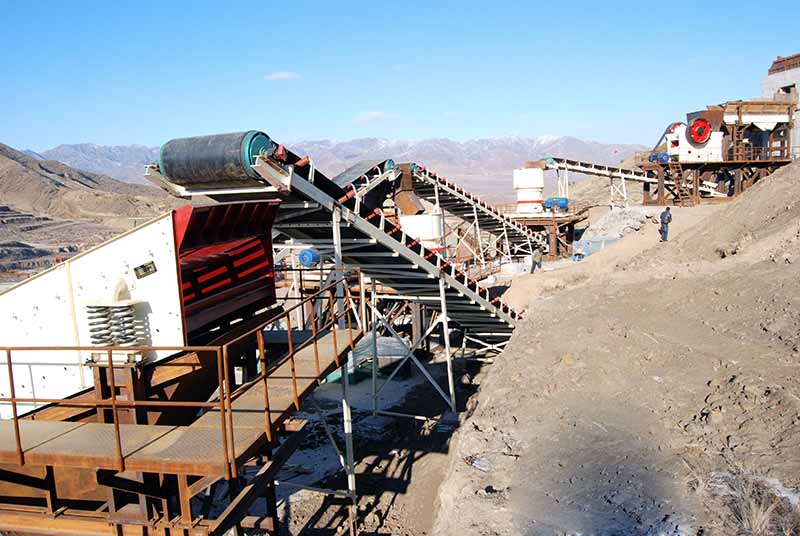
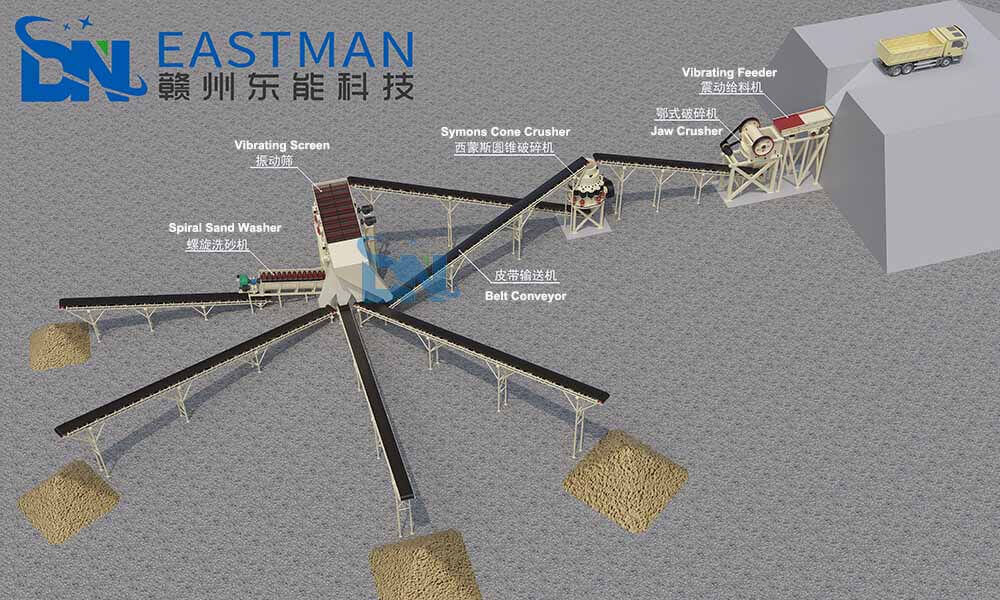
A typical stone crushing process includes:
Feeding → Primary Crushing → Secondary Crushing → Screening → Tertiary Crushing/Sand Making → Final Products
A common mistake is to compare the price of a crusher to that of a complete crushing plant. These are
Depending on the project, the main equipment may include:
- Vibrating feeder for controlled material feeding
- Jaw crusher for primary crushing
- Cone or impact crusher for secondary crushing
- VSI crusher when manufactured sand or improved particle shape is required
- Vibrating screen for product classification
- Belt conveyors for material transfer
- Electrical and control systems
- Dust suppression and other environmental equipment
The supporting equipment is not optional if you want a stable production line. Current cost breakdowns show crushing equipment can account for roughly half to 70% of the initial budget, with civil works, installation, transportation, electrical systems, and spare parts making up significant additional portions.
The Main Factors That Determine Stone Crusher Plant Cost
Production Capacity
Capacity is one of the biggest drivers of investment. A 50 TPH plant requires smaller crushers, screens, motors, and conveyors than a 300 TPH operation.
However, choosing the smallest possible plant is not always the best way to save money. If your market requires 200 TPH but you install a 100 TPH line, you may eventually need another production line, additional labor, and additional infrastructure.
Before purchasing equipment, determine:
- Required tons per hour
- Daily and annual production
- Operating hours per day
- Expected future production growth
- Required finished-product sizes
Raw Material Properties
The rock has a direct influence on crusher selection and operating cost.
Hard and abrasive rocks, such as granite and basalt, generally require robust primary and secondary crushing equipment. Jaw crushers are commonly used for primary reduction, followed by cone crushers for secondary or tertiary crushing.
Medium-hard rocks, such as limestone and dolomite, may be efficiently processed using impact crushing in appropriate applications.
The key parameters to test include:
- Mohs hardness
- Abrasiveness
- Compressive strength
- Moisture content
- Maximum feed size
- Material density
Using the wrong crusher can make a seemingly cheap plant expensive to operate. For example, applying an impact crusher to highly abrasive hard rock can accelerate wear and increase downtime.
Finished Product Requirements
If the market requires:
- 0–5 mm manufactured sand
- 5–10 mm aggregate
- 10–20 mm aggregate
- 20–30 mm aggregate
you will need appropriate screening and possibly additional crushing or shaping stages.
Therefore, product specification should be decided before equipment selection, not after.
How Much Does Each Crusher Type Cost?
Individual machine prices vary substantially with capacity and configuration. As a general reference, industry cost guides place small jaw crushers at roughly $15,000–$50,000, impact crushers around $25,000–$60,000 for smaller units, and cone crushers around $30,000–$80,000 for smaller units. Larger machines can cost several times more.
But individual equipment price should not be confused with plant cost.
Jaw Crusher
Jaw crushers are commonly used for primary crushing because they can accept relatively large feed material and provide reliable coarse reduction.
They are particularly suitable for:
- Granite
- Basalt
- River stone
- Limestone
- Large quarry rock
Cone Crusher
Cone crushers are commonly selected for secondary and tertiary crushing, particularly when processing hard and abrasive materials.
Their advantages include:
- Consistent product size
- High crushing efficiency
- Good suitability for hard rock
- Multiple crushing-stage applications
Impact Crusher
Impact crushers can be attractive for softer materials and applications where particle shape is important.
They are commonly considered for:
- Limestone
- Dolomite
- Some recycled materials
- Aggregate shaping applications
Mobile Crusher
Mobile crushing plants generally have a higher initial equipment cost but provide significant flexibility. They can be particularly valuable when the crushing site changes frequently or when material must be processed close to the excavation point. Current cost references also identify mobility as a major reason for their premium over stationary equipment.
Stationary vs. Mobile Stone Crusher Plant Cost
Factor | Stationary Plant | Mobile Plant |
Initial equipment cost | Generally lower | Generally higher |
Foundation | Usually required | Minimal compared with stationary |
Relocation | Difficult | Easy |
Large-scale capacity | Excellent | Good to excellent |
Best application | Long-term quarry | Multiple or temporary sites |
Installation | More involved | Faster |
For a quarry expected to operate at the same location for many years, a stationary plant can provide better economics. For short-term projects, road construction, or multiple deposits, mobility may justify the additional investment.
What Are the Hidden Costs of a Stone Crusher Plant?
The equipment quotation is only the beginning. A realistic project budget should also include:
Site and Civil Construction
Budget for:
- Foundation
- Steel structures
- Site leveling
- Drainage
- Equipment platforms
- Access roads
- Transportation and Installation
Consider:
- Ocean or inland freight
- Container loading
- Heavy-haul transportation
- Crane services
- Mechanical installation
- Electrical commissioning
Remote sites can significantly increase these costs.
Power and Electrical System
A complete plant requires more than crusher motors. The power system may include:
- Transformers
- Control cabinets
- Cables
- Starters or variable-frequency drives
Generator backup where necessary
Wear Parts and Maintenance
Common consumables include:
- Jaw plates
- Cone liners
- Blow bars
- Screen mesh
- Conveyor belts
- Bearings
A low purchase price can become expensive if wear parts have a short service life or are difficult to obtain.
The Laboratory-to-Industrial Workflow: A Smarter Way to Control Cost
One of the most important improvements to conventional crusher-buying advice is to test the material before finalizing the plant design.
Instead of starting with “Which crusher should I buy?”, start with:
What is my material, and what should the final product be?
A practical workflow is:
- Representative sampling → 2. Laboratory testing → 3. Crushing and screening test → 4. Process-flow design → 5. Equipment selection → 6. Pilot or industrial validation → 7. Final plant installation
Laboratory testing can help determine hardness, abrasiveness, size distribution, moisture, and beneficiation or processing characteristics where relevant.
This approach prevents over-sizing equipment and reduces the risk of selecting a crusher that performs poorly on the actual feed material.
How to Optimize Stone Crusher Plant Investment?
The goal should not be the lowest purchase price. The goal should be the lowest cost per ton of acceptable product.
Several practical strategies can improve economics:
- Match stone crusher capacity to realistic market demand.
- Avoid unnecessary crushing stages.
- Select the crusher according to rock hardness and abrasiveness.
- Design conveyors and screens to avoid bottlenecks.
- Choose durable wear parts when their longer service life offsets the higher purchase price.
- Use automation where it can reduce labor, improve monitoring, or prevent major equipment failures.
- Leave room for future capacity expansion.
Proper feed control is particularly important. Oversized feed can increase motor load and accelerate wear, while inconsistent feeding can reduce overall plant efficiency. A well-balanced circuit often delivers more value than simply purchasing a larger crusher.
How to Estimate Stone Crusher Plant ROI?
Once total investment is known, estimate whether the plant can generate an acceptable return.
A simplified calculation is:
- Annual Revenue = Actual Production × Selling Price per Ton
- Annual Profit = Revenue − Operating Costs
- ROI = Annual Profit ÷ Total Investment × 100%
Operating costs should include:
- Electricity or fuel
- Labor
- Wear parts
- Maintenance
- Lubricants
- Transportation
- Water and dust control
- Administrative expenses
Use actual production, rather than theoretical crusher capacity, when calculating revenue.
Conclusion
So, how much does a stone crusher plant cost? A small plant may start with tens of thousands of dollars, while medium and large commercial plants can require hundreds of thousands or more. The final investment depends on capacity, material properties, crusher configuration, infrastructure, transportation, automation, and operating requirements. The most reliable approach is to avoid choosing equipment based solely on a machine’s advertised price.
Eastman is a professional mining equipment manufacturer with 38 years of rich experience in the mining construction industry. We can also provide lab equipment. Welcome to consult our professional team to get factory prices. According to your situation and product requirements, we will design a complete sand-crushing production line flow chart and provide an accurate quotation.


