When working with construction aggregates, particularly for concrete production, one of the most critical technical parameters you will encounter is the crushing value. If you are sourcing or producing crushed stone, understanding this index is non-negotiable. It directly impacts the strength, durability, and safety of your final structure.
So, what exactly is the crushing value? More importantly, is a high or low crushing value better?
The short answer is simple: The lower the crushing value, the better the quality. However, the full explanation involves material science, engineering standards, and proper equipment selection. Let’s break down everything you need to know.
What is Crushed Stone?
Before diving into crushing values, we must define the material itself. Crushed stone is a man-made construction aggregate produced by crushing large rocks. By definition, it is a material where:
- Particles larger than 200mm do not exceed 50% of the total weight.
- Particles larger than 20mm account for more than 50% of the total weight.
- The particles are angular (with sharp edges and corners), unlike smooth natural gravel (pebbles).
Why Classification Matters?
Proper classification solves common production problems such as:
- Excessive dust content.
- Too many elongated or flat (needle-like or flaky) particles.
- Inconsistent grading and particle size distribution.
- High content of weak or weathered particles.
Crushed stone is generally divided into two main categories for concrete applications:
- Crushed Stone (from hard rocks).
- Pebbles (natural river stones, which have different crushing characteristics).
Furthermore, based on rock type, crushed stone comes from:
- Sedimentary rocks (limestone, dolomite).
- Metamorphic rocks (marble, schist, gneiss).
- Igneous rocks (granite, basalt, diorite).
Each rock type exhibits a different crushing value, which we will explore below.
Crushed Stone Crushing Value: High vs. Low – Which is Better?
Crushed Stone Crushing Value: High vs. Low – Which is Better?
The crushing value is a mechanical index that measures a stone’s ability to resist failure under compressive load. In simple terms, it tells you how hard and strong the stone is.
The verdict: A LOWER crushing value is ALWAYS better.
Why is a Low Crushing Value Better?
- Higher Hardness: A low percentage means the stone resists fracturing. It can withstand heavy traffic, high hydraulic pressures, and structural loads.
- Greater Strength: For concrete, a low crushing value ensures the aggregate acts as a strong, inert filler. The stone must be harder than the hardened cement paste surrounding it.
- Superior Wear Resistance: Low-crush stone lasts longer in pavements, railway ballasts, and foundations without disintegrating into dust or smaller fragments.
Conversely, a high crushing value indicates a weak, soft, or highly weathered stone. Using such an aggregate would lead to low-strength concrete, surface cracking, and premature structural failure.
Standard Crushing Value Ranges
Different industries have set specific thresholds:
General Mineral Aggregate Crushing Value: Typically ranges from 20% to 23% for standard applications.
Highways & Bridges (Coarse Aggregate): Classified into three grades:
- Class I (For concrete > C60): Crushing value < 10% (Best quality)
- Class II (For concrete C30–C60): Crushing value < 20% (Standard quality)
- Class III (For concrete < C30): Crushing value < 30% (Low-grade applications)
General Building Construction: Follows the same standard as highways:
- Class I: <10%
- Class II: <20%
- Class III: <30%
Crushing Values by Rock Type
The permissible crushing value also depends on the rock’s geological origin and the concrete grade.
Rock Type | Concrete Strength Grade | Permissible Crushing Value (%) |
Sedimentary Rocks (e.g., Limestone) | C60-C40 / ≤C35 | ≤10 / ≤16 |
Metamorphic or Deep Igneous (e.g., Granite, Gneiss) | C60-C40 / ≤C35 | ≤12 / ≤20 |
Extrusive Igneous (e.g., Basalt, Andesite) | C60-C40 / ≤C35 | ≤13 / ≤30 |
Key Takeaway: For high-strength concrete (above C60), you need stone with a crushing value under 12% (or 10% for sedimentary rock). Anything above 20% is only suitable for low-grade, non-structural fill.
How to Achieve a Good (Low) Crushing Value: Choosing the Right Crusher
Producing high-quality crushed stone with a low crushing value isn’t just about the raw rock; it’s about selecting the right crushing equipment. A poorly chosen crusher will produce excessive fines, elongated particles, and internal micro-fractures that increase the crushing value.
If you need a production capacity of 400 tons per hour, here are the three best machine types and their recommended models.
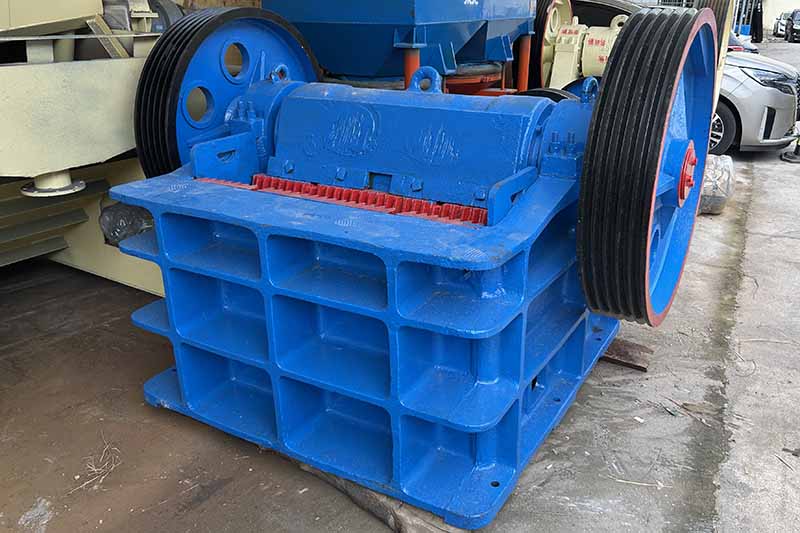
Jaw Crusher (Primary Coarse Crushing)
Best for: Extremely hard and abrasive rocks.
Mechanism: Squeezing (extrusion). The movable jaw presses the rock against a fixed jaw.
Advantages for Crushing Value:
- Deep crushing cavity with no dead zone, preventing clogging.
- Uniform particle size, which helps secondary crushers work more efficiently.
- Large crushing ratio.
- Wedge adjustment for easy discharge control.
Recommended Model for 400 t/h: PE-1000*1200 jaw crusher
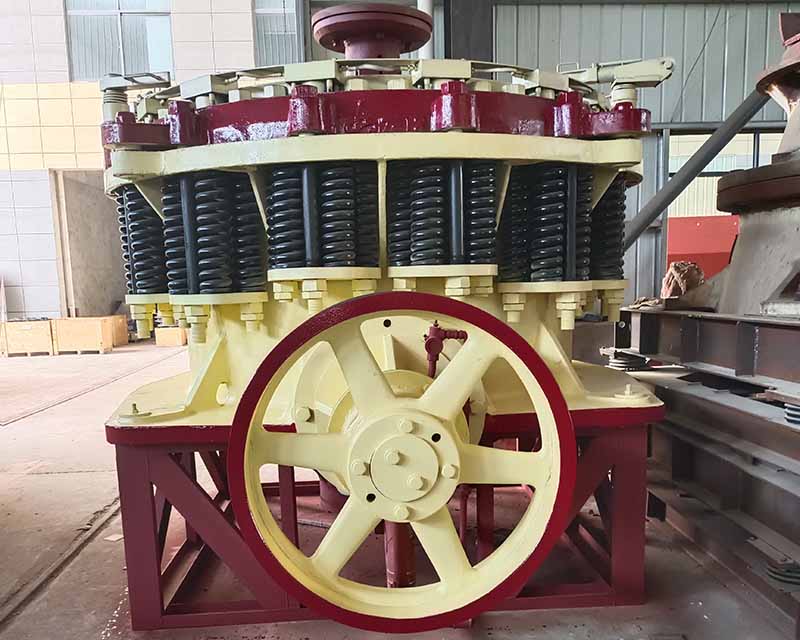
Cone Crusher (Secondary/Tertiary – For Hard Stones)
Best for: Hard, abrasive stones like basalt, granite, and river pebbles.
Mechanism: Lamination (inter-particle crushing). The mantle moves eccentrically against the concave, crushing rock against rock.
Advantages for Crushing Value:
- The cone crusher significantly reduces needle-like and flaky particles. (Lamination crushing naturally produces cubical grains.)
- Hydraulic adjustment for easy discharge setting.
- High wear resistance of liners reduces long-term operating costs.
- Longer service life.
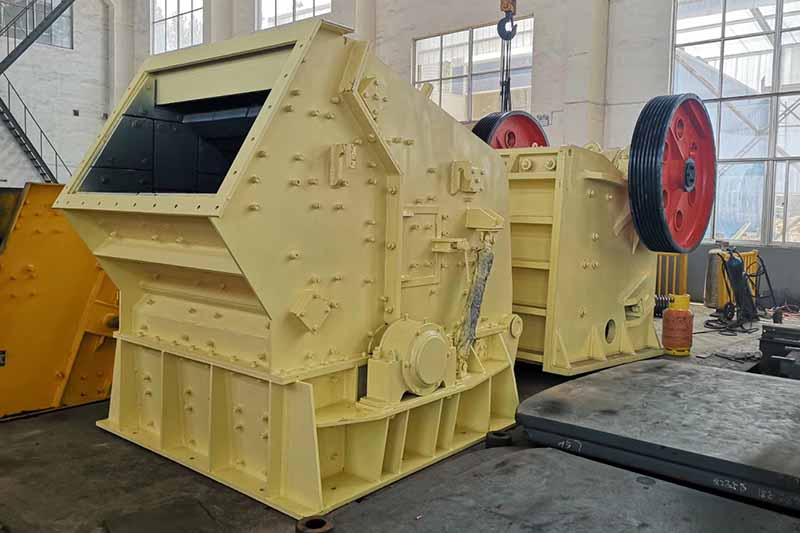
Impact Crusher (Secondary – For Soft Stones)
The Impact Crusher is Best for: stones like limestone, dolomite, and weathered granite.
Mechanism: High-speed impact. Rotors hurl rocks against breaker plates.
Advantages for Crushing Value:
- Excellent particle shape (cubical).
- Meets the “more crushing, less grinding” requirement.
- Easy gap adjustment between the impact plate and the hammer.
- Uses advanced high-wear materials to reduce hammer and liner replacement frequency.
Recommended Model for 400 t/h: PF1520
Quick Selection Guide (400 t/h Capacity)
Rock Hardness | Recommended Crusher | Model Example |
Very Hard (Basalt, Granite) | Jaw Crusher + Cone Crusher | PE-1000*1200 (Jaw) + Hydraulic Cone |
Medium (Limestone, Marble) | Jaw Crusher + Impact Crusher | PE-1000*1200 (Jaw) + PF1520 (Impact) |
Soft/Weathered | Single Impact Crusher | PF1520 |
Summary: Key Points
To ensure your concrete meets strength and durability requirements, always keep these facts in mind:
- Lower is better. Always aim for a crushing value under 20%, and under 10% for high-strength concrete (C60+).
- Don’t ignore rock type. Sedimentary rocks (limestone) generally require stricter limits (≤10%) than igneous rocks (≤13%).
- The crusher determines the value. A bad crusher creates micro-fractures and needle-like particles that artificially inflate the crushing value.
For 400 t/h production:
- PE-1000*1200 Jaw Crusher for primary hard rock crushing.
- Cone Crusher for secondary crushing of hard stones (basalt/granite) to minimize the production of flaky particles.
- PF1520 Impact Crusher for soft-to-medium stone (limestone) to achieve the best shape.
By focusing on achieving a low crushing value and pairing your raw material with the 400 t/h crusher, you guarantee that crushed stone will perform exceptionally under pressure—building roads, bridges, and skyscrapers that stand the test of time.
Eastman is a professional mining equipment manufacturer with 38 years of rich experience in the mining construction industry. We can also provide lab equipment. Welcome to consult our professional team to get factory prices. According to your situation and product requirements, we will design a complete sand-crushing production line flow chart and provide an accurate quotation.


