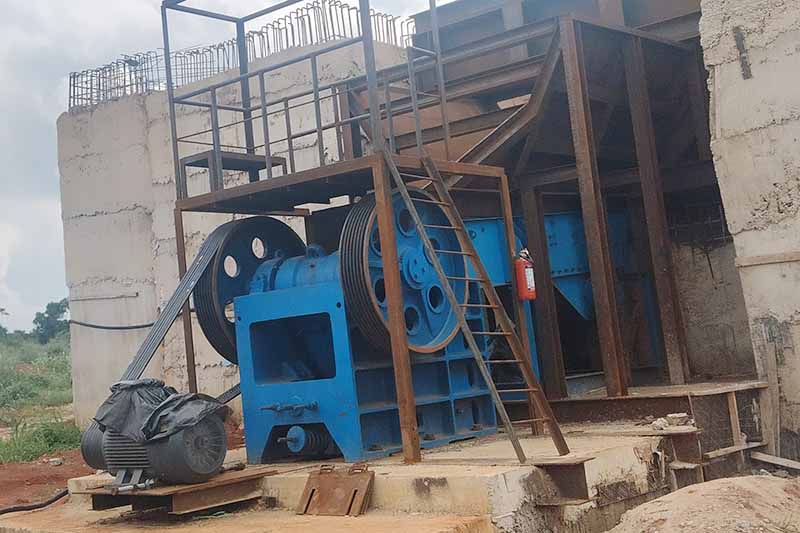
A jaw crusher is the heartbeat of primary crushing station. When it stops, everything downstream stops with it. While unplanned downtime and premature wear part failure can feel like inevitable costs of doing business, most jaw crusher longevity issues stem from operational habits. No need a complete plant redesign to see immediate improvements. By focusing on what goes into the crusher, how the chamber is loaded, and the metallurgy of wear parts, it will significantly reduce cost and extend the equipment service life. Here are four expert, actionable tips you can implement on your site today.
1. Optimize Feed Material: Balance Fines and Boulders
The material feed into the jaw crusher dictates nearly every aspect of its performance, from throughput to wear rate. Many operators focus solely on the maximum feed size, but the distribution of material sizes is equally critical.
The Problem with Oversized Boulders
While a jaw crusher is designed for primary reduction, feeding it exclusively with large boulders creates bottlenecks. If the feed contains only large rocks, the primary station’s total throughput drops because the crusher has to work harder to reduce every piece. For smooth operation and maximum capacity, the top feed size should typically be 80% to 90% of the feed opening depth. Exceeding this limit risks bridging and blockages that can halt production entirely.
The Hidden Cost of Fines
Conversely, feeding excessive fines—material already smaller than the closed-side setting—is a common mistake that accelerates wear. This sliding action creates abrasive wear on the jaw dies rather than the beneficial compressive crushing action that breaks rock. Furthermore, a feed overloaded with fines reduces the percentage of voids in the chamber, preventing the larger rocks from properly compressing against one another.
Actionable Step
Implement or optimize your pre-screening process. Use a scalping screen or a grizzly feeder ahead of the crusher to remove material that is already at the desired product size. This ensures the crusher’s energy is spent only on reducing oversized material, not on unnecessarily churning fine particles. A well-graded feed—a balanced mix of sizes ranging from just above the CSS to the maximum allowable size—promotes inter-particle crushing, which improves product shape and reduces wear on the dies.
2. Select the Right Jaw Dies and Understand Manganese Steel
Jaw dies are consumable, but how you select them and understand their material properties can mean the difference. The standard material is austenitic manganese steel (often called Hadfield steel), but many operators misunderstand how it works.
The Work-Hardening Mechanism
Manganese steel is unique because of its work-hardening properties. In its initial state, it is relatively soft and ductile, allowing it to withstand tremendous impact without cracking. However, under high impact and compression—exactly what happens inside a jaw crusher—the surface layer rapidly hardens. As rocks crush against the die, the exterior becomes extremely hard and wear-resistant, while the interior remains tough and absorbs shock.
Why “More Manganese” Isn’t Always Better
A common misconception is that a higher percentage of manganese in the alloy automatically equates to a longer-lasting part. This is not true. Manganese alloys also contain carbon and chrome. Increasing manganese content requires careful adjustments to the carbon and chrome levels to maintain the balance of hardness and toughness. An improperly balanced alloy can become brittle and crack under impact, leading to catastrophic failure rather than gradual wear.
Actionable Step
Instead of simply asking for “high manganese,” work with your supplier to select a die profile and alloy specifically matched to your feed material. For abrasive, high-silica feed, you may need a different grade than for tough, hard rock. Additionally, consider the tooth profile. Aggressive tooth shapes create focused stress points that fracture rock with less energy, while wider valleys allow for faster discharge of fines, preventing packing. Always ensure the dies are properly seated, and check the closed side setting (CSS) daily; as dies wear, the CSS opens up, leading to larger product and increased load on downstream equipment.
3. Maintain a Full and Balanced Crushing Chamber
The age-old practice of “choke feeding” a jaw crusher remains one of the most effective ways to improve efficiency and extend liner life, yet it is frequently ignored in favor of regulated, starved feeding.
The Science of Choke Feeding
A jaw crusher operates most efficiently when the crushing chamber is kept full. When the chamber is full, material is drawn down into the V-shaped cavity. This inter-particle crushing not only reduces the load on the jaw dies themselves but also produces a more cubical product with fewer slabby or elongated particles.
Conversely, if you feed the crusher at a controlled rate that leaves the chamber partially empty, the crusher relies almost entirely on the direct metal-to-rock impact. This concentrates wear on a narrow band of the jaw plate, creating deep grooves and reducing the usable life. A properly filled chamber distributes the crushing force over a larger area of the die surface, wearing it more evenly.
Actionable Step
Keep the crushing chamber at least 80% full during operation. Install a level sensor above the chamber to control feeder speed. If the level drops, the feeder speeds up; if the level gets too high, it slows down. This simple automation prevents starvation. Never let the crusher run empty or “breathe” air; maintain consistent, full-chamber operation.
4. Monitor Liner Wear and Adjust Settings Proactively
Wear is inevitable, but unexpected failure is not. The key to extending jaw crusher life is to treat liner wear as a managed variable rather than a surprise breakdown.
The Domino Effect of Neglected Wear
As jaw dies wear, the gap between them (the CSS) increases. If you do not compensate for this wear by adjusting the settings, the product exiting the primary crusher becomes coarser. Feed this oversized material to the secondary crusher(cone crusher or impact crusher), which may become overloaded, forcing it to open its settings, which affects the tertiary circuit. This “domino effect” can cripple the efficiency of the entire plant.
Furthermore, uneven wear can lead to poor nip angles, reducing the crusher’s ability to grab and crush material efficiently. If one side of the die wears significantly faster than the other (improper feed distribution), you may need to replace the dies prematurely.
Actionable Step
Make CSS inspection a part of your daily start-up routine. Use a measuring tool to check the gap at the bottom of the chamber. If it has opened beyond your target, adjust it immediately (using hydraulic wedges or shims, depending on your crusher model). At the same time, visually inspect the dies for uneven wear patterns. If you notice a deep groove in the center or excessive wear on one side, investigate your feed distribution—you may be feeding too heavily on one side or experiencing segregation in the hopper. Modern options also include non-contact wear evaluation, but for most operators, a disciplined daily visual and physical check is the most immediate and effective defense against unexpected downtime.
Conclusion
Extending the life of jaw crusher is not about expensive upgrades or complex overhauls. It comes down to disciplined, everyday operational practices that anyone on your team can implement. By controlling feed composition to avoid oversized boulders and excessive fines, selecting and understanding the right manganese jaw dies for the required application, keeping the crushing chamber consistently full to promote rock-on-rock breakage, and monitoring liner wear with daily CSS checks, you take control of the crusher’s performance and lifespan.
Each of these four tips reinforces the others. A well-graded feed protects your dies; properly matched dies wear more evenly; a full chamber distributes that wear across the entire liner surface; and proactive monitoring catches problems before they cascade into downstream failures. Together, they form a complete maintenance strategy that reduces cost-per-ton, minimizes unplanned downtime, and keeps your entire plant running at peak efficiency.
Start with one tip this week—whether it’s a daily CSS check or a feeder speed adjustment—and build from there. The results in extended wear life and reduced operating costs will speak for themselves.
Eastman is a professional mining equipment manufacturer with 38 years of rich experience in the mining construction industry. We can also provide lab equipment. Welcome to consult our professional team to get factory prices. According to your situation and product requirements, we will design a complete sand-crushing production line flow chart and provide an accurate quotation.


