Commissioning a new crushing plant is a critical step before starting commercial production. Even after you install all the equipment, the plant may not be ready to operate. Mechanical installation errors, electrical faults, insufficient lubrication, and poorly coordinated equipment can cause unexpected breakdowns, safety risks, and production delays during initial operation.
A systematic pre-commissioning inspection helps identify these problems before raw materials enter the production line. From checking equipment foundations and electrical connections to verifying crushers, screens, conveyors, and safety systems, every important component must meet its installation and operating requirements.
So, what should you check before commissioning a new crushing plant? This guide covers the essential inspection areas, testing procedures, and practical considerations to help ensure a safer startup and more reliable production.
1. Verify the Plant Design and Equipment Configuration
Before inspecting individual machines, confirm that the installed crushing plant matches the approved design. The equipment arrangement should support the required production capacity, raw material characteristics, and finished-product specifications.
Start by reviewing the process flow diagram and actual equipment layout. Check the material route from the raw material hopper and vibrating feeder through the primary crusher, secondary crusher, vibrating screens, and finished-product conveyors. Ensure all transfer points are properly connected, and that equipment is accessible for maintenance.
Equipment capacity matching is equally important. For example, if the primary crusher produces more material than the secondary crusher or vibrating screen can handle, accumulation and bottlenecks may occur.
Before commissioning, verify:
- Maximum feed size and raw material characteristics.
- Rated capacity of each crusher, feeder, and screen.
- Conveyor width, speed, and conveying capacity.
- Required finished-product sizes and grading.
- Material flow direction and equipment connections.
Consider the actual rock hardness, abrasiveness, moisture, and clay content; these factors influence crushing performance and equipment selection.
2. Inspect Foundations and Mechanical Installation
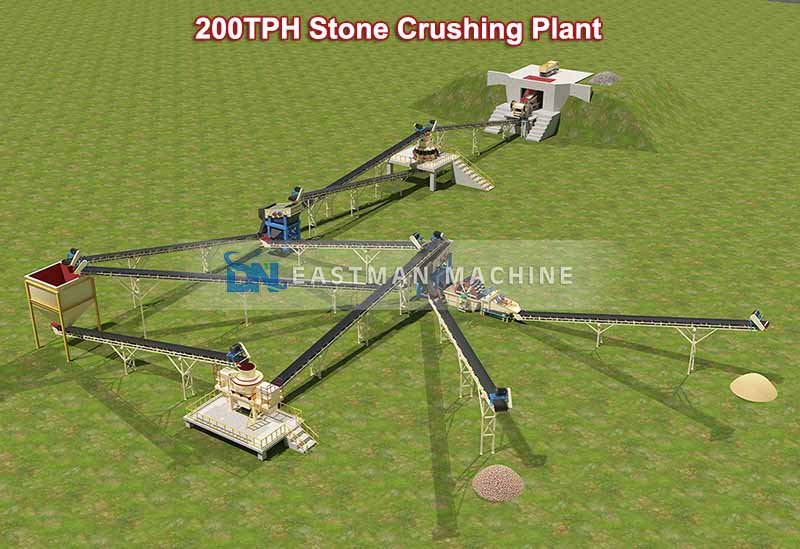
Proper mechanical installation provides a stable foundation for equipment operation. Poor alignment, loose fasteners, or inadequate foundations can cause excessive vibration, premature component wear, and unexpected mechanical failures.
First, inspect the concrete foundations and supporting structures. Look for visible cracks, uneven surfaces, damaged grouting, and loose anchor bolts. Confirm that equipment mounting positions match the approved installation drawings.
Next, check the alignment and assembly of major equipment. Install crusher shafts, motor couplings, pulleys, and drive systems according to manufacturer specifications. Moving components must have sufficient clearance, and all mechanical connections should be secure.
Pay particular attention to:
- Foundation bolts and equipment mounting points.
- Shaft and coupling alignment.
- Bearings and pulley connections.
- V-belt tension and condition.
- Protective guards and mechanical fasteners.
- Crushing chamber clearance and foreign objects.
Loose bolts or incorrect alignment may not prevent startup, but they can create serious problems once the equipment operates under load. Therefore, complete mechanical inspections before energizing the machines.
3. Check Electrical Systems and Control Equipment
Electrical readiness is another essential part of crushing plant commissioning. Incorrect wiring, insufficient power supply, and faulty control systems can interrupt production or damage equipment.
Check the incoming power supply against the plant’s electrical design. Inspect distribution cabinets, cables, grounding connections, circuit breakers, and motor protection devices. Motor nameplate ratings should match the electrical requirements.
Before normal operation, verify that motors rotate in the correct direction. Incorrect rotation can affect stone-crusher performance and material transportation.
The control system also requires careful testing. If the plant uses a PLC or variable-frequency drives (VFDs), confirm that sensors, alarms, and automatic operating sequences function correctly.
Important inspection points include:
- Power supply voltage and electrical connections.
- Motor wiring and rotation direction.
- Grounding and overload protection.
- PLC control panel and operating indicators.
- Temperature, pressure, and level sensors.
- Emergency shutdown and equipment interlocks.
For example, if a downstream conveyor stops unexpectedly, the control system should prevent upstream equipment from continuing to feed material into the blocked production line.
4. Inspect Lubrication, Hydraulic, and Cooling Systems
Supporting systems are essential for protecting crushing equipment during initial operation. Inadequate lubrication or hydraulic problems can quickly lead to overheating, abnormal wear, and equipment failure.
For lubrication systems, check the oil level, lubricant grade, pipelines, pumps, and filters. Confirm that oil circulates correctly and reaches the required lubrication points. Inspect all connections for leakage.
For crushers equipped with hydraulic systems, verify oil levels, operating pressure, hoses, cylinders, and valves. Ensure that hydraulic adjustment and protection functions respond correctly.
Test cooling systems and other auxiliary equipment.
Before commissioning, confirm that:
- Lubricants meet manufacturer specifications.
- Oil pumps and filters operate correctly.
- Hydraulic pressure is within the specified range.
- Pipelines and hoses have no visible leakage.
- Cooling fans and heat exchangers function properly.
- Dust suppression and water supply systems are ready.
One practical recommendation is to check lubrication and hydraulic systems before starting the main crusher motor. This helps prevent avoidable damage during the first operating cycle.
5. Inspect Crushers, Screens, and Conveyors Individually
Every machine in a crushing plant has specific inspection requirements. General equipment inspection is not enough because different components experience different operating stresses.
- For a jaw crusher, inspect the jaw plates, toggle plate, bearings, flywheel, and discharge opening. Confirm that the crushing chamber is clear and that the closed-side setting (CSS) matches the initial operating requirements.
- For cone crushers, check the mantle, concave liners, lubrication system, hydraulic adjustment system, and crushing chamber. For impact crushers, inspect blow bars, impact plates, rotor assembly, and fastening components.
- Vibrating screens also require attention. Damaged screen mesh, loose mounting bolts, or abnormal vibration can affect screening efficiency and finished-product grading.
- For belt conveyors, inspect belt alignment, tension, idlers, pulleys, belt cleaners, and transfer chutes. Check that emergency pull cords and belt protection devices are installed and functional.
A useful equipment-level checklist includes:
Equipment | Main inspection points |
Jaw crusher | Jaw plates, bearings, toggle plate, CSS |
Cone crusher | Mantle, concave, hydraulics, lubrication |
Impact crusher | Blow bars, rotor, impact plates |
Vibrating screen | Screen mesh, springs, vibrator |
Belt conveyor | Belt alignment, tension, idlers |
Vibrating feeder | Motor, vibration mechanism, hopper |
6. Verify Safety Devices and Site Conditions
Complete Safety inspections before commissioning begins. All rotating and moving components should have appropriate protective guards, while access platforms, stairs, handrails, and walkways must be safe for personnel.
Test emergency stop buttons, conveyor pull-cord switches, safety interlocks, and other installed protection devices. Confirm that emergency shutdown sequences operate correctly.
Establish lockout/tagout (LOTO) procedures to prevent unexpected equipment startup during inspection and maintenance.
Environmental conditions deserve attention as well. Dust suppression systems, drainage channels, wastewater collection, and site lighting should be ready. Wet or sticky raw materials may block in feeders, screens, and transfer chutes, so check material conditions before production.
7. Prepare the Commissioning Team and Spare Parts
A successful startup requires coordination between equipment suppliers, installation contractors, engineers, and plant operators.
Assign clear responsibilities for mechanical inspections, electrical testing, safety verification, and commissioning approval. Operators should understand startup and shutdown sequences, emergency procedures, and basic troubleshooting methods.
Prepare essential inspection tools, including multimeters, torque wrenches, pressure gauges, and temperature measurement instruments.
It is also advisable to prepare critical spare parts before commissioning, such as:
- Crusher liners and wear plates.
- Conveyor belts and replacement components.
- Bearings and lubrication filters.
- Screen meshes and panels.
- Recommended lubricants and hydraulic fluids.
Having these supplies available helps reduce delays if minor defects or adjustments are identified during initial operation.
8. Conduct No-Load Testing Before Feeding Material
After completing installation inspections, individual machines should undergo no-load testing.
Start each piece of equipment separately according to the manufacturer’s procedures. Observe motor rotation, abnormal noise, vibration, bearing temperature, and lubrication conditions.
Once individual tests are successful, conduct an integrated no-load test of the entire production line. This verifies that crushers, feeders, screens, and conveyors operate in the correct sequence.
Check equipment interlocks, emergency shutdown responses, and conveyor synchronization.
9. Perform Controlled Load Testing and Verify Performance
Passing no-load tests does not guarantee that a crushing plant can achieve its designed production capacity. Controlled feeding is necessary to evaluate actual operating performance.
Introduce raw material gradually and increase the feed rate according to the commissioning plan. Monitor crusher loading, conveyor movement, screen distribution, and material accumulation.
Important operating parameters include:
- Production throughput (tons per hour).
- Motor current and power consumption.
- Bearing temperature and vibration.
- Hydraulic and lubrication pressure.
- Crusher CSS settings.
- Finished-product particle-size distribution.
Collect samples from finished-product outlets and conduct sieve analysis to verify grading requirements. In closed-circuit plants, distinguish finished-product output from circulating material when calculating production capacity.
If performance falls below expectations, investigate equipment settings, material characteristics, and possible bottlenecks before making adjustments.
10. Complete Commissioning Records and Final Inspection
Before final acceptance, document all inspection and testing results.
Important documents include mechanical and electrical inspection reports, no-load test results, loaded commissioning records, safety verification reports, and product quality analysis.
Also prepare equipment manuals, electrical drawings, spare parts lists, maintenance schedules, and operator training records.
A final sign-off should involve the commissioning manager, relevant engineers, safety representatives, and authorized project personnel. Resolve critical safety or technical defects before proceeding.
Conclusion
Knowing what to check before commissioning a new crushing plant helps prevent installation problems from becoming expensive operational failures. Design verification, mechanical and electrical inspections, lubrication checks, equipment testing, and safety preparation are all essential steps.
More importantly, treat commissioning as a systematic verification process. By following a structured inspection checklist and conducting controlled testing, plant owners can reduce startup risks, improve equipment reliability, and establish a stable foundation for long-term production.
Eastman is a professional mining equipment manufacturer with 38 years of rich experience in the mining construction industry. We can also provide lab equipment. Welcome to consult our professional team to get factory prices. According to your situation and product requirements, we will design a complete sand-crushing production line flow chart and provide an accurate quotation.


