Excessive fines are a common problem in aggregate crushing plants. When the percentage of fine material rises beyond the required product specification, the consequences can extend far beyond particle size. Too many fines can reduce product value, increase dust, overload screens, raise recirculating loads, and make it harder to maintain stable plant performance.
However, excessive fines do not always mean that the crusher itself is the problem. Fine material may already exist in the raw feed, or it may be generated through repeated crushing and poor screening. The most effective approach is therefore to identify where the fines are coming from before changing crusher settings.
This article explains the major causes of excessive fines and provides a practical method for diagnosing and reducing them across the entire crushing circuit.
What Does "Too Many Fines" Mean?
In aggregate production, “too many fines” should always be considered in relation to the required final product gradation. A certain amount of fine material may be desirable for manufactured sand, base materials, or other applications, while the same amount may be excessive for another aggregate specification.
It is also important to distinguish between natural fines and manufactured fines. Natural fines are already present in the feed material, whereas manufactured fines are created by crushing and repeated reduction.
Before adjusting the stone crusher, establish the actual problem by checking:
- The required final product specification
- Percentage passing the critical sieve size
- Natural fines content in the raw feed
- Crusher discharge gradation
- Final product gradation
- Recirculating load
This simple comparison can prevent operators from attempting to solve a screening or feed problem by changing the crusher.
Where Are the Extra Fines Coming From?
A crushing plant is a complete material-flow system, which is not a collection of independent machines.
The basic circuit may look like:
Raw Feed → Primary Crusher → Secondary Crusher → Vibrating Screen → Final Product + Oversize Return
Sampling material at different points can show where the increase in fines occurs. If the raw feed already contains a high percentage of fine material, the crusher may not be responsible. If fines increase sharply after a particular crushing stage, that machine deserves closer investigation.
Screening must also be considered. Final product containing excessive fines does not necessarily mean the crusher generated excessive fines. Incorrect screen media, blinding, pegging, overloading, or poor material distribution can change how material is separated and ultimately alter the final product.
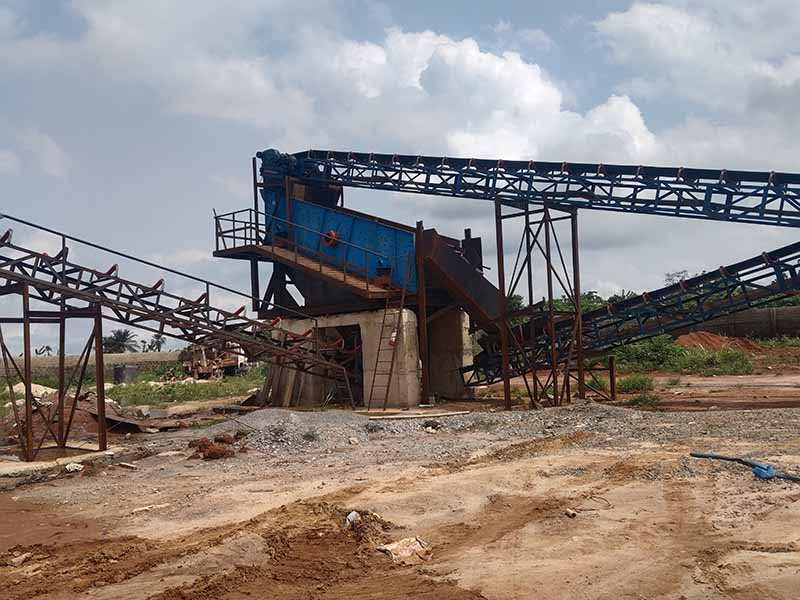
Common Causes of Excessive Fines in a Crushing Plant
The Closed-Side Setting Is Too Tight
The closed-side setting (CSS) is one of the most important crusher parameters affecting product size. When the CSS is reduced, material undergoes greater size reduction, which can increase the proportion of smaller particles.
A common mistake is to make the crusher setting progressively tighter to achieve a smaller product. This can produce the required top size but simultaneously create an undesirable amount of fines.
Before changing CSS, consider:
- Feed size distribution
- Rock hardness and fracture characteristics
- Target product size
- Crusher model and chamber
- Existing recirculating load
Verify the actual CSS periodically rather than relying entirely on the displayed setting.
Worn Liners or an Incorrect Chamber Profile
Crusher liners determine the geometry of the crushing chamber. As liners wear, the chamber profile changes and the crusher may gradually produce a different particle-size distribution.
A gradual increase in fines can therefore be a useful warning sign of changing liner condition.
Monitor:
- Liner wear pattern
- Product gradation
- Crusher power draw
- Throughput
- Crusher pressure and operating behavior
The chamber and liner profile should also match the application. A configuration designed for aggressive reduction may not be appropriate when the primary objective is controlling fines.
Improper Speed or Stroke
In cone crushing, eccentric speed and stroke influence the crushing action and material behavior inside the chamber. Changing these parameters can alter crushing intensity, throughput, particle shape, and product gradation.
No universal speed or stroke setting works for every crusher and rock type. Start with the manufacturer’s recommended operating range, then adjust based on actual production data.
After an adjustment, monitor:
- Product gradation
- Throughput
- Power consumption
- Crusher operating pressure
- Product shape
Making several major changes at once makes it difficult to determine which adjustment actually solved—or caused—the problem.
Uneven Feed Distribution
A crusher performs best when material is distributed properly throughout the crushing chamber. Segregated or off-center feed can create uneven loading and inconsistent crushing conditions.
Common warning signs include:
- Uneven liner wear
- Fluctuating power draw
- Unstable product gradation
- Reduced throughput
- Localized material buildup
Maintain a consistent feed rate and use appropriate feeding and distribution equipment to keep the crushing chamber properly loaded.
Excessive Recirculating Load
In a closed-circuit plant, oversize material is returned to the cone crusher or impact crusher for further reduction. Some recirculation is necessary, but excessive recirculating load can create a cycle of repeated crushing.
The process can develop into:
Poor screening → More oversize → Higher recirculation → Repeated crushing → More fines
This is why increasing crusher capacity alone may not solve a fines problem. If the screen sends too much material back to the crusher, the circuit may continue crushing particles that are already close to the desired size.
Poor Screen Performance
The vibrating screen is often overlooked when diagnosing excessive fines. Yet the screen determines which particles enter the final product stream and which return for additional crushing.
Potential causes include:
- Incorrect screen aperture
- Screen blinding
- Pegging
- Damaged screen media
- Excessive feed depth
- Uneven material distribution
- Insufficient screening area
- Wet or sticky feed
If fines increase without a major change in crusher operation, inspect the screening stage before making aggressive crusher adjustments.
Too Many Natural Fines in the Feed
Some raw materials naturally contain significant amounts of fine particles. Crushing these materials further can increase the fines.
A feed gradation test can determine whether the issue exists before crushing begins. Where appropriate, scalping or pre-screening can remove natural fines before they enter the primary crusher.
This can reduce unnecessary crushing and improve the overall plant efficiency.
Changes in Feed Material
Even when crusher settings remain unchanged, changes in the material can significantly affect fines production.
Important characteristics include:
- Rock hardness
- Moisture content
- Clay content
- Weathering
- Fracture pattern
- Abrasiveness
- Feed size distribution
For example, softer or more fractured feed may break differently from a harder, more competent rock. Operators should therefore investigate changes in the quarry feed whenever product gradation changes unexpectedly.
How to Diagnose Excessive Fines Step by Step
Rather than immediately changing CSS or replacing equipment, use a systematic troubleshooting process.
Step 1: Confirm the specification.
Identify exactly which sieve size is showing excessive material.
Step 2: Sample the raw feed.
Determine how much fine material already exists before crushing.
Step 3: Check crusher discharge.
Compare the feed and discharge gradations to identify where fines are being generated.
Step 4: Inspect the crusher.
Check CSS, chamber configuration, liner wear, speed, stroke, and operating conditions.
Step 5: Inspect the screen.
Look for blinding, pegging, overload, damaged media, and poor material distribution.
Step 6: Check recirculation.
Determine whether excessive oversize is repeatedly returning to the crusher.
Step 7: Make controlled adjustments.
Change one major parameter at a time and measure the resulting product gradation.
This evidence-based approach is much more reliable than adjusting the crusher based only on the appearance of the final stockpile.
How to Reduce Fines Without Sacrificing Capacity?
The goal is not necessarily to eliminate fines. It is to produce the right gradation at the required production rate.
Depending on the root cause, practical solutions may include:
- Opening CSS within the crusher’s recommended operating range
- Selecting a more suitable chamber or liner profile
- Improving feed distribution
- Controlling feed rate
- Replacing excessively worn liners
- Improving screen efficiency
- Removing natural fines through appropriate pre-screening
- Reducing unnecessary recirculation
- Reviewing the balance between crushing stages
- Matching crusher operation to changes in feed characteristics
The best solution often involves several small improvements rather than one dramatic machine adjustment.
The Fines Feedback Loop: Why the Problem Can Get Worse
One of the most important concepts in crushing-plant troubleshooting is that excessive fines can become part of a self-reinforcing circuit problem.
When crushing produces more fines, the screen must handle a big volume of small particles. If screening becomes inefficient, more material may remain in the circulating load. That material returns to the crusher.
The resulting cycle is:
Excessive crushing → More fines → Greater screen burden → Poor separation → Higher recirculation → Repeated crushing → More fines
Breaking this cycle may require improving screening or reducing recirculation rather than simply changing the crusher.
Optimize the Entire Circuit, Not Just the Crusher
A crushing plant should ultimately be optimized around the final product.
A useful operating strategy is to monitor:
- Feed particle-size distribution
- Crusher discharge gradation
- Final product gradation
- Crusher power draw
- Throughput
- Screen efficiency
- Recirculating load
- Liner wear
The relationship between measurements can reveal problems before they become major production issues.
Most importantly, remember that the lowest possible fines percentage is not necessarily the objective. Some applications require manufactured fines, while others place tighter limits on fine material. The correct target is the gradation required by the final product specification.
Conclusion
If your crushing plant is producing too many fines, do not assume the crusher is automatically at fault. Excessive fines can result from a tight CSS, worn liners, unsuitable chamber configuration, improper operating parameters, uneven feed, changing rock properties, poor screening, excessive recirculation, or naturally fine feed material.
The most effective troubleshooting method is to trace the material through the entire circuit. Compare feed and discharge gradations, inspect the crusher and screen, evaluate recirculating load, and make controlled adjustments based on measurable results.
Eastman is a professional mining equipment manufacturer with 38 years of rich experience in the mining construction industry. We can also provide lab equipment. Welcome to consult our professional team to get factory prices. According to your situation and product requirements, we will design a complete sand-crushing production line flow chart and provide an accurate quotation.


